Practical guides to public and home charging infrastructure, safety and energy management.
National infrastructure
How to read a charger map without confusing a listed point with an available one
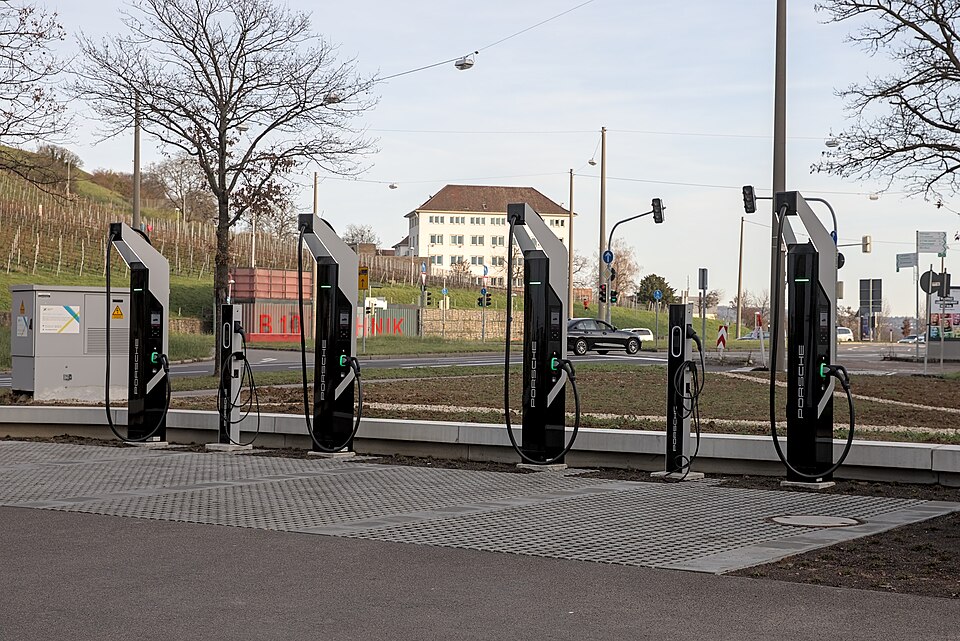
Charging stations in Stuttgart; infrastructure reference photograph, not a Paraguay location. Photo: Alexander Migl · Wikimedia Commons · CC BY-SA 4.0At a glance
1Locate the charger
2Check connector and status
3Confirm access
A national map helps with trip planning, but its value depends on the quality and freshness of each listing. A point on a map may be closed, private, access-restricted or lack the connector your vehicle needs.
Check the location and hours, connector type and count, power, payment method, access requirements, price per kWh or session, and last update. If price, status or operator details are missing, treat them as unconfirmed; do not assume charging is free or that the equipment is working.
Open maps combine operator data, public sources and community reports. Ecotroni therefore links each listing to its source and distinguishes reported information from real-time availability. Status is live only when an operator provides it through a current integration; a driver report is a time-stamped observation, not a guarantee for the next person.
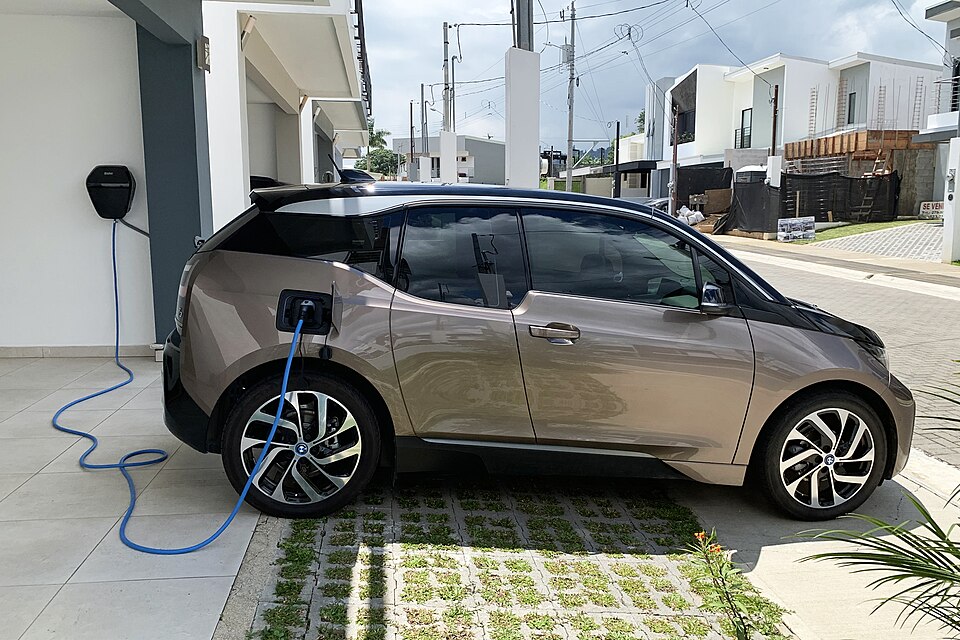
Residential wallbox charging in Costa Rica; a real example, not an Ecotroni installation. Photo: Mariordo (Mario Roberto Durán Ortiz) · Wikimedia Commons · CC BY-SA 4.0At a glance
1Supply and panel
2Protection and cabling
3Charger and vehicle
Charger power should not be chosen from battery size alone. The vehicle limits the AC power it can accept, while the home has its own limits based on supply, available capacity and panel condition.
A proper assessment checks single- or three-phase supply, existing protection, grounding, cable route, distance to the parking space, weather exposure and mounting location. Protection selection and operational checks must match the selected equipment and actual installation.
Ask for a proposal that separates charger, base installation and additional upgrades. Ecotroni lists home installation from Gs. 3,500,000, VAT included; the charger is not included. Final scope and price are confirmed after reviewing the vehicle, property and materials required.
Solar charging requires the equipment to work together
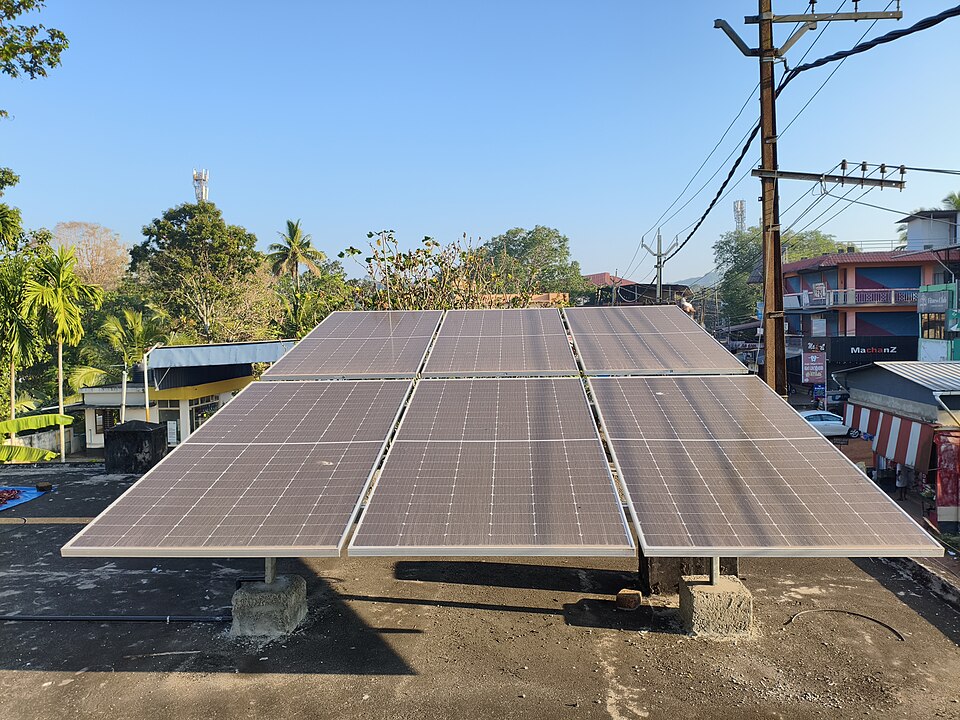
Solar panels on a residential roof; context image, not the Loma Plata project. Photo: Dr. Chinchu C. · Wikimedia Commons · CC BY 4.0At a glance
1Solar panels
2Inverter and metering
3Home and charging
Having solar panels does not automatically mean a charger can identify available power at every moment. To prioritize solar surplus, the inverter, meter and charger usually need to communicate; support depends on equipment models and configuration.
Usage hours matter too: a home may generate more solar power during the day while the vehicle is parked overnight. Consumption monitoring, scheduling and smart control can help coordinate charging with other loads. Benefits depend on actual usage, equipment and tariffs; savings should not be promised without analyzing them.
An assessment should treat charging as part of the home or business system. It may review available capacity, simultaneous demand, planned expansion and storage if justified by the goal. Batteries are not automatically required to install a charger.
Electric mobility in Paraguay: a market with many brands and charging needs
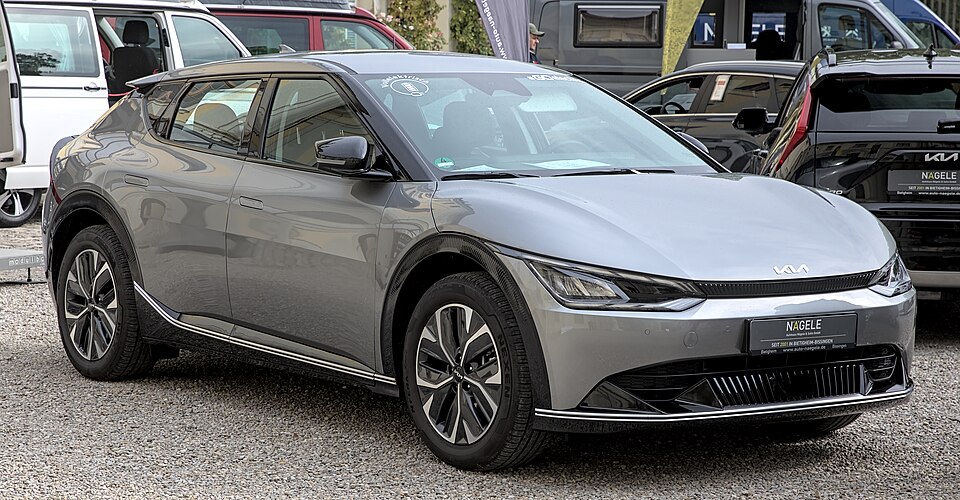
Kia EV6 at a show in Germany; one of the models mentioned. Photo: Alexander Migl · Wikimedia Commons · CC BY-SA 4.0At a glance
1BEV: battery electric
2PHEV: plug-in hybrid
3HEV: no plug
Paraguay's electrified vehicle offer is no longer limited to one manufacturer or one vehicle type. The local market includes battery electric vehicles (BEVs), plug-in hybrids (PHEVs) and non-plug-in hybrids (HEVs). These categories have different charging needs: BEVs and PHEVs can charge externally, while a conventional HEV does not use a plug-in charger.
Recent presentations illustrate the breadth of the market. Santa Rosa has introduced vehicles and brands including the JMEV EV2 and EV3, the ZEEKR 7X and the Jetour T1 PHEV. Automotor brought Lotus to Paraguay with the all-electric Eletre and Emeya. Established brands also offer electric models, including Chevrolet Spark EUV and Kia EV6. Model availability, specifications and importer support should always be checked directly with the local distributor.
For charging, the make alone is not enough to specify an installation. The exact model and trim determine the connector and the vehicle's maximum AC charging rate; the home or business supply, protection, earthing and cable run determine what can be installed safely. Public charging listings also vary in access, connector, power, price and the freshness of any reported status. Check the individual location details before relying on it.
CADAM data reported by ABC Color put hybrids and electric vehicles at 14.7% of imports through August 2026. This combined figure signals a wider electrified market, but it should not be read as battery-electric share alone.